























Why water infrastructure maintenance must be non-negotiable
Many households and businesses understandably grumble when maintenance work leads to scheduled supply interruptions or temporary closures. It is human to resist inconvenience.
Yet this perspective overlooks the broader, intergenerational consequences of inaction. Maintenance is not optional. It is a fundamental prerequisite for a reliable and resilient water supply system.
Water security and water quality are two central strategic priorities within AWSISA’s Ten-Point Plan. Achieving both depends fundamentally on consistent and effective maintenance.
The recent water crises affecting many parts of the country serve as a sobering reality check. They have exposed just how fragile our water systems have become. In cities and rural towns alike, ageing pipes, untreated sewage discharges and recurring interruptions are no longer isolated incidents. They are becoming the norm. At its core, it is a story of governance, investment and, critically, maintenance. It reflects decades of deferred upkeep and underinvestment in essential infrastructure.
As the Association of Water and Sanitation Institutions in South Africa (AWSISA), our message is clear: We can no longer postpone responsibility for maintaining our water infrastructure. This is a shared national obligation. It is also a message that will take centre stage at the AWSISA Africa and Global South Water and Sanitation Dialogue 2026, under the theme “Accelerating Climate-Resilient Water and Sanitation Solutions for Africa and the Global South – Every Drop Counts”, scheduled for 23–26 November 2026. The Dialogue will provide a vital platform to share lessons, strengthen collaboration and advance practical solutions to water insecurity across the continent.
The winter season, with its typically lower water demand, presents an ideal window for undertaking major infrastructure maintenance. Yet this opportunity is often undermined by persistent and uncontrolled water losses through leaks. While these losses place additional strain on already constrained systems, they must not become an excuse for inaction. On the contrary, they underscore the urgency for disciplined, well-coordinated maintenance planning and execution.
Effective coordination across the entire water value chain is critical. Even where maintenance has not been pre-scheduled, there is significant scope for opportunistic interventions — taking advantage of planned shutdowns upstream or downstream to carry out essential repairs, upgrades and system optimisation. This requires foresight, communication and operational agility across all institutions responsible for water delivery.
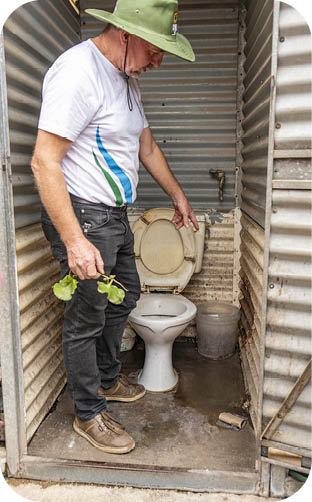
Too often, insufficient attention is paid to the maintenance of residential water and sanitation infrastructure, despite its substantial contribution to overall system losses. Like all infrastructure, household plumbing systems have a finite lifespan and require regular inspection and upkeep. Neglect at this level not only exacerbates water losses but also places unnecessary pressure on already strained municipal networks.
Water infrastructure, from treatment plants and pump stations to distribution networks and reservoirs, does not last forever. Like all engineered systems, it requires consistent maintenance, renewal and strategic investment. When this is neglected, the consequences are immediate, measurable and costly.
Across South Africa, municipalities report staggering losses. Some water service authorities spend as little as 3% of the value of their assets on maintenance, far below the recommended 8% benchmark. Even well-resourced municipalities sometimes allocate less than 1%. The result is a growing dependence on emergency measures, particularly tankering. In the 2023/24 financial year alone, more than R2.3 billion was spent on water tankers, a temporary and costly stopgap that cannot substitute for a functional system.
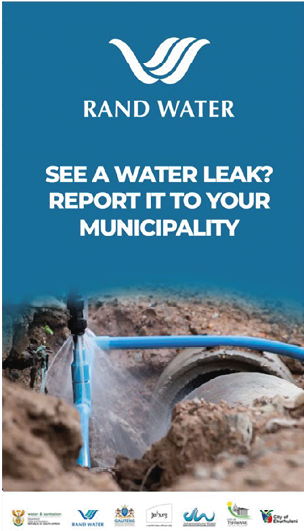
Water losses through leaks and vandalism are equally alarming. In some regions, non-revenue water - water produced but never billed - accounts for nearly half of total supply. The financial and operational implications are severe, and they worsen with every year that maintenance is deferred.
The scale of the challenge is stark. In Gauteng alone, an estimated 431 billion litres of water are lost annually. Assuming municipalities purchase bulk water from Rand Water at approximately R13, 99 per kilolitre, this represents a significant financial burden running into billions of rand each year. To put this into perspective, the volume of water lost annually in Gauteng is sufficient to supply entire provinces such as the North West or the Northern Cape. This level of inefficiency is simply unsustainable in a water-scarce country.
Planned maintenance prevents catastrophic breakdowns. When systems are neglected, failures occur unpredictably, resulting in longer disruptions and significantly higher repair costs than scheduled maintenance would require. Poorly maintained wastewater treatment plants discharge untreated effluent into rivers and ecosystems, posing serious risks to public health and the environment.
Maintenance also curbs escalating costs. A minor leak today can become a major pipe burst tomorrow, and emergency reconstruction invariably costs far more than routine upkeep. Reliable water supply, in turn, underpins economic activity. Agriculture, manufacturing, services and households all depend on consistent access to water. Frequent disruptions erode investor confidence, disrupt production and constrain economic growth. In this context, maintenance is not a cost, but an investment. A few hours of planned interruption today can prevent days or even weeks of disruption tomorrow.
The importance of maintenance is further reinforced by the findings of the Green Drop Report, which consistently highlights the strong link between infrastructure condition and water quality outcomes. Well-maintained systems are far more capable of delivering safe, reliable water services and of supporting the deployment of climate-resilient and innovative technologies. They also enable the development of redundancy and flexibility within infrastructure networks. These are critical features that help minimise disruption during emergencies, system failures and planned maintenance activities.
One municipality offers clear evidence of the cost of neglect, where the absence of a comprehensive water services development plan and effective maintenance strategies has led to water loss rates as high as 66%, environmental degradation and an expensive reliance on tankering. This is not an isolated case. It reflects systemic weaknesses. It demonstrates that neglecting maintenance is far more costly than planned, preventative action.
Globally, the case for maintenance is equally compelling. Water utilities lose an estimated 126 billion cubic metres of water each year through leaks and inefficiencies, enough to provide every person on earth with a meaningful daily allocation. In developing countries, halving non-revenue water could generate an additional $2.9 billion annually, enabling millions more people to be served without developing new water sources.
Phnom Penh in Cambodia offers a powerful example. Through governance reform, effective metering, accountability and reinvestment, the city reduced non-revenue water from over 70% to around 6%, while achieving continuous supply. This lesson shows that sustained maintenance, sound governance and reinvestment deliver measurable and lasting results.
South Africa’s water story can be one of success, but time is not on our side. Resilience is not built overnight. It is sustained through consistent maintenance and strategic investment. Water revenue must be ring-fenced to ensure that funds are reinvested into infrastructure rather than diverted elsewhere. Governance and professionalisation must be strengthened so that technical expertise, accountability and timely implementation become the norm.
At the same time, enforcing resilience measures, such as onsite water storage for businesses and communities, can reduce the impact of necessary maintenance work. Equally important is public awareness. Households and businesses must recognise that the inconvenience of planned maintenance is far less costly than prolonged outages caused by system failure.
Water is the lifeblood of our economy, our society and our environment. Maintenance is essential, and occasional inconvenience is the price of reliability. When supply is interrupted for essential repairs, it should be understood as an investment in tomorrow’s security. Businesses, too, must plan around scheduled maintenance as part of building a resilient and productive economy.
The AWSISA Africa and Global South Water and Sanitation Dialogue 2026 will provide a critical platform to accelerate climate-resilient solutions, share innovation and reaffirm a simple but urgent truth: every drop counts. This is not a conversation for the future. It is a call to action now, for South Africa and the broader Global South.
Water crises are preventable. Deferred maintenance has consequences, while timely investment builds resilience. The choices we make today will determine whether future generations inherit a reliable system or continue to face avoidable shortages and breakdowns.
Investing in the maintenance of our water infrastructure, even at the cost of short-term inconvenience, is not optional. It is essential to securing South Africa’s water future and the well-being of all its people.
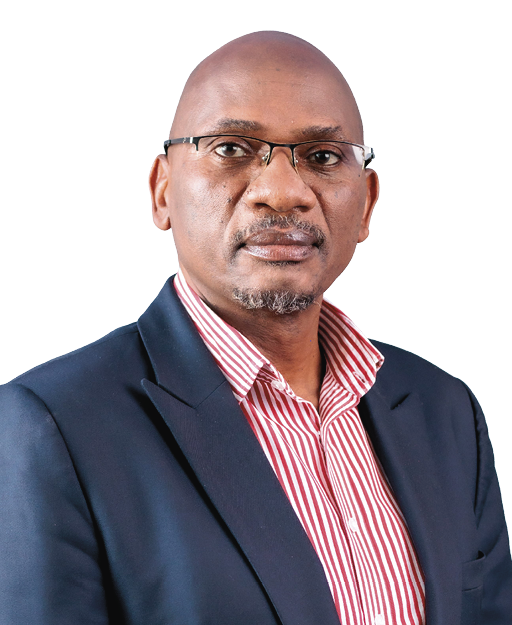
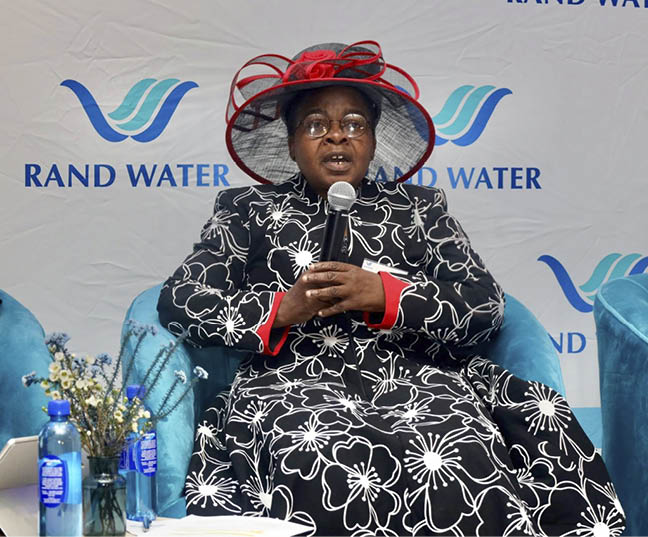
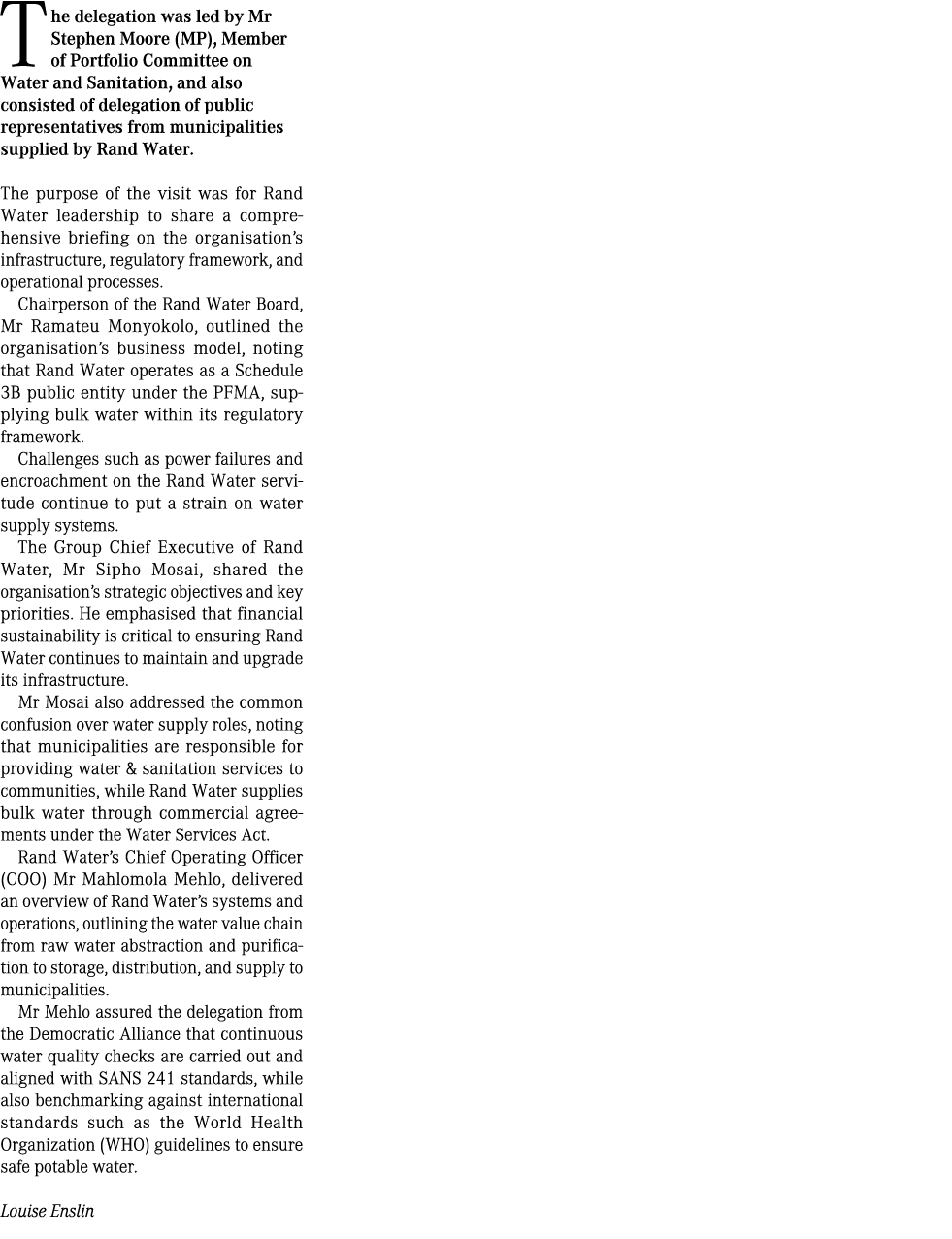
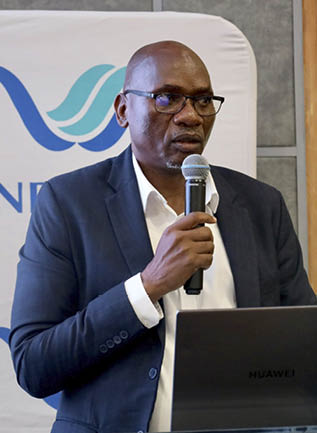
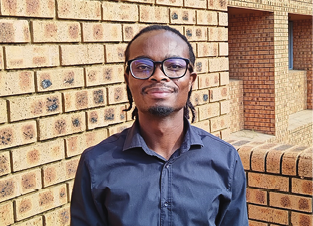
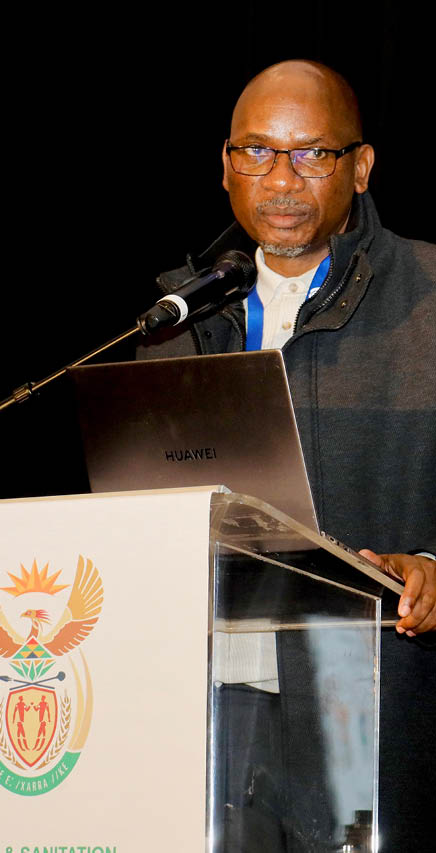
Ramateu Monyokolo is Chairperson of the Rand Water Board and the Association of Water and Sanitation Institutions in South Africa (AWSISA).